In the rapidly evolving landscape of technology, the convergence of blockchain and artificial intelligence (AI) presents a groundbreaking opportunity to enhance security measures. As AI systems increasingly become integral to various sectors, from finance to healthcare, ensuring the integrity and security of the data they handle is paramount. Blockchain technology, with its decentralized and immutable nature, offers a robust solution to the security challenges faced by AI systems. This article delves into how integrating blockchain with AI can significantly bolster security through improved data management and system integrity.
Leveraging Blockchain for Secure AI Data Management
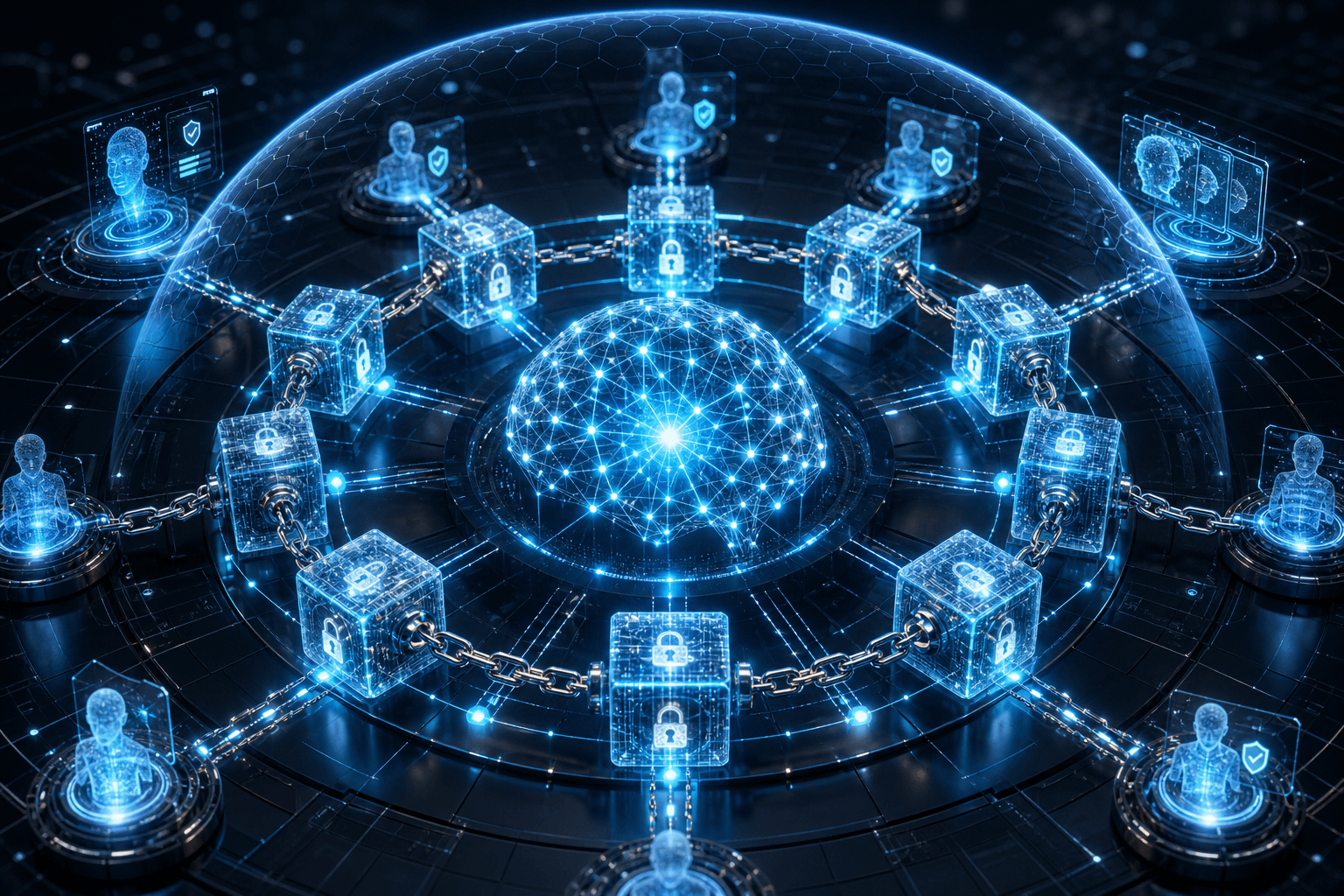
Integrating blockchain technology with AI systems revolutionizes how data is managed and secured. Blockchain’s decentralized ledger ensures that data is not stored in a single location, thereby mitigating risks associated with centralized data breaches. Every piece of data is encrypted and linked to a previous record, creating a chain that is nearly impossible to alter without detection. This structure provides a transparent and tamper-proof log of all data transactions, which is crucial for the integrity of AI training datasets and operational data.

Moreover, blockchain’s consensus mechanisms enhance the trustworthiness of data used in AI systems. Consensus algorithms, such as Proof of Work (PoW) or Proof of Stake (PoS), require multiple nodes in the network to agree on the validity of transactions before they are added to the blockchain. This decentralized verification process prevents any single entity from manipulating the data, ensuring that the AI systems operate on reliable and verified information. Consequently, the AI models trained on such datasets can make more accurate predictions and decisions, free from the biases or errors that could stem from compromised data.
Blockchain also facilitates secure data sharing among multiple parties involved in AI development. In collaborative environments, where data is often exchanged between different organizations, maintaining data integrity and privacy is challenging. Blockchain’s cryptographic techniques and smart contracts enable secure and conditional data sharing, ensuring that only authorized parties can access the data under predefined conditions. This secure exchange not only protects sensitive information but also fosters trust among collaborators, thereby accelerating the pace of AI innovation.
Enhanced AI Security Through Blockchain Integration
The integration of blockchain technology into AI systems significantly enhances their overall security. One critical aspect is the protection against adversarial attacks, where malicious actors attempt to corrupt AI models by introducing harmful data. Blockchain’s immutable ledger records every transaction, making it exceedingly difficult for attackers to introduce malicious data without being detected. This transparency allows for real-time monitoring and auditing of data inputs, providing a robust defense mechanism against data poisoning attacks.
Furthermore, blockchain can secure the AI model’s operational integrity through decentralized model storage and version control. Traditional AI systems often rely on centralized repositories for storing models, which can be vulnerable to unauthorized access and tampering. By distributing the AI models across a blockchain network, each model version is cryptographically secured and linked to a specific point in time. This distributed approach ensures that any modification to the model is transparent and traceable, preserving the model’s authenticity and reliability over time.
Additionally, blockchain-based identity verification systems can enhance the security of AI-powered applications, particularly those involving sensitive personal data. Utilizing blockchain for identity management allows for the creation of decentralized, self-sovereign identities that give individuals control over their personal information. AI systems can then authenticate users through these secure identities without relying on centralized databases that are prone to breaches. This not only protects user privacy but also ensures that AI applications interact with legitimate and verified entities, reducing the risk of fraud and unauthorized access.
The fusion of blockchain technology with AI systems offers a formidable approach to enhancing security in an increasingly interconnected world. By leveraging blockchain’s decentralized and immutable properties, AI systems can achieve unprecedented levels of data integrity and operational security. As the adoption of AI continues to expand across various industries, the integration of blockchain will play a pivotal role in safeguarding the data and systems that underpin these advancements. Embracing this synergy not only addresses current security challenges but also paves the way for a more secure and trustworthy digital future.